
How to Track Restaurant Meals Without Losing Your Mind
A way to estimate restaurant food that doesn't require a food scale, doesn't ruin dinner, and lands close enough to right.
 By Matt McCabeMarch 3, 20266 min read/ Lifestyle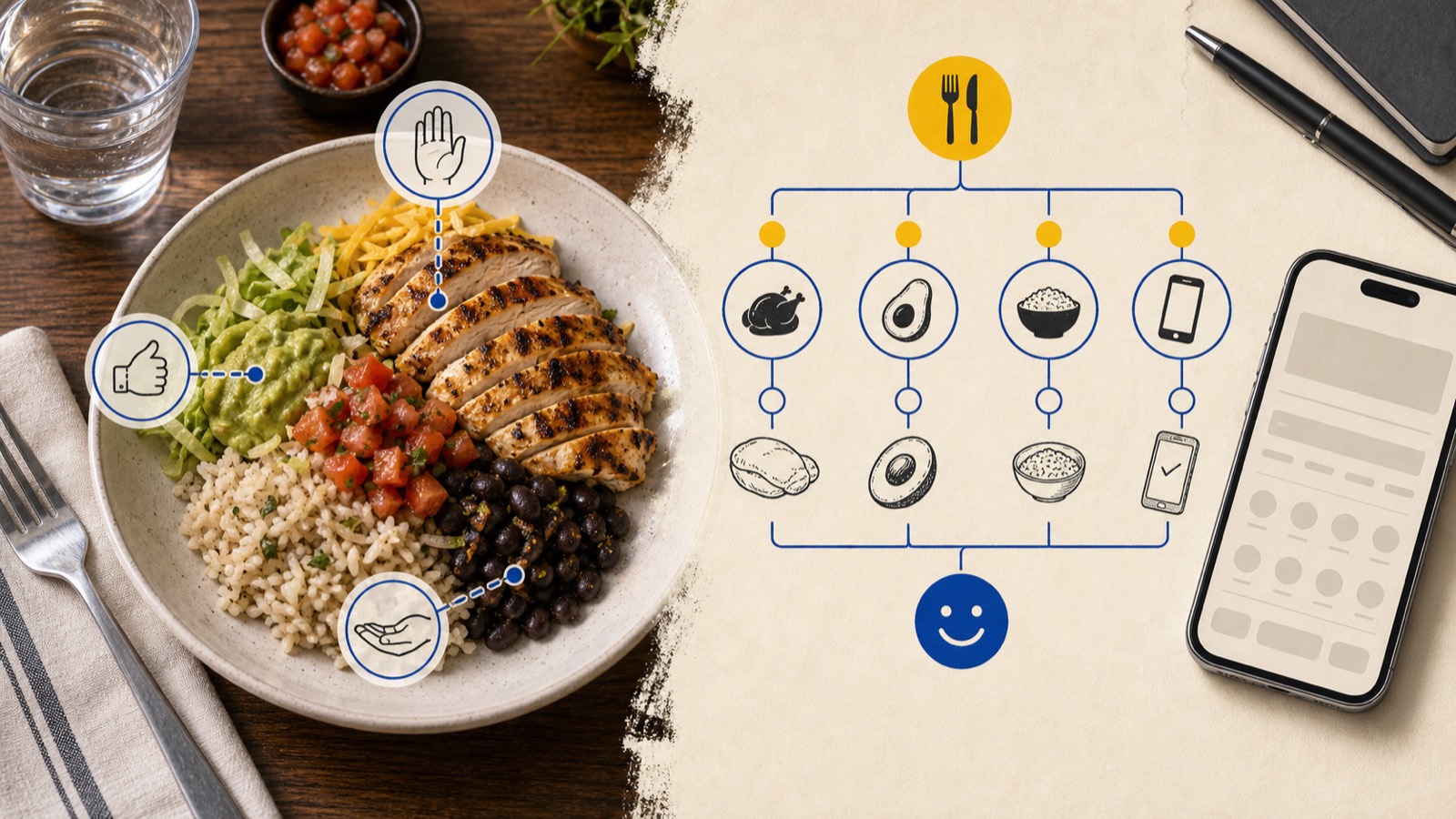
You can hit your macros at home with no trouble. The moment a menu shows up, the system feels like it's about to collapse. The portions are guesses. The sauces are mystery fat. The person across from you wants to share an appetizer, and you're sitting there mentally weighing edamame.
You don't need a food scale at dinner. You do need a way to estimate that doesn't fall apart at the first surprise.
How wrong are restaurant estimates, usually?
Most people underestimate restaurant meals, including the people who run the restaurants. Stated and actual calorie counts often diverge in prepared and chain foods (Urban et al., 2010). In sit-down chains, consumers underestimated entrée calories by ~175 on average, with the largest underestimates on the highest-calorie meals (Block et al., 2013). Independent restaurants don't publish numbers at all.
Add to that the fact that your estimate of the same plate is usually low. The combination is why "I tracked everything and still didn't lose weight" is so often a restaurant problem. Estimate generously, especially for fat.
Step 1: pick the protein first
The single biggest move at a restaurant is letting protein lead. You sit down hungry, you see the pasta, you order the pasta, and the protein on the plate is whatever cheese came on top.
Reverse the order. Scan the menu for the highest-protein option that sounds good. Steak, grilled fish, chicken bowl, lean burger. Order that, then build the rest of the meal around it. This one move turns most restaurant meals into something that fits your day.
Step 2: estimate the protein generously, the carbs honestly, the fat pessimistically
- Less protein than you think. A chicken bowl is often 4 to 6 oz of chicken, not the half-pound you imagined. Estimate around 30g protein for a chicken entree, 40g for a steak entree, 25g for a fish entree.
- Carbs are usually estimable. A side of rice is about 60g of carbs. A pasta entree is 80 to 120g. A sandwich is around 50g.
- Fat is the big one. Restaurant cooking uses much more oil and butter than home cooking. Even "healthy" entrees usually run 20 to 40g of fat. Estimate high and you'll be closer to right.
Restaurant tracking is a game of confidence intervals, not precision. The goal is a useful estimate, not lab accuracy.
Step 3: pick two of three
At any given meal, decide which two of these three you're optimizing for:
- Hit the protein target for the meal.
- Stay in the calorie range for the meal.
- Eat what you actually want.
Most of the time, pick #1 and #3. Order what sounds good, but skew toward the protein-heavy option. The calories tend to take care of themselves because you didn't also order loaded fries.
Special occasions, pick #1 and #2. The food doesn't need to be perfect; this doesn't need to happen at every meal.
On a real write-off (vacation, birthday, anniversary), pick #3 alone. Eat the thing. Log it as a 1,500-calorie meal. Move on. One meal a week at 1,500 calories doesn't derail anything; one meal a week of guilt about a 1,500-calorie meal can.
Step 4: build a default order for places you go often
If you eat at the same handful of places regularly, pre-decide your order before you walk in. "I get the bowl with double chicken, no rice, extra beans, salsa." Now it's not a decision, it's a default.
After ordering the same thing a few times, you'll know its macros within a reasonable margin. Those restaurants effectively become free meals: predictable, low-friction, easy to log.
Step 5: log later
Don't sit at the table with MyFitnessPal open. It ruins the meal for you and the people you're with, and the estimate isn't any more accurate because you typed it sooner. Log the next morning. Estimate fat high. Move on.
The shortlist of restaurant moves that just work
- Sub a side of fries for a salad or vegetables.
- Order grilled or roasted instead of fried or crispy.
- Sauce on the side when the sauce is the heavy thing.
- Double the protein, halve the rice. Most places do this for $2 to $3.
- Skip the bread basket, or take one piece and don't refill.
- Water during the meal. Alcohol calories disappear from the spreadsheet faster than anything else.
The simple version
Restaurant meals don't have to derail anything. They derail people because the system breaks at the first sign of imprecision. Order protein first. Estimate generously. Pick which two of three you're optimizing. Log later. The plan still works.
For information and education, not medical advice. If you have a health condition, are pregnant, or take medication that interacts with diet, talk to a clinician before making changes.
End of note
Subscribe
Get the next Field Note by email
A short email when a new article or recipe ships. No spam, no upsell, unsubscribe in one click.