
One Pan, Four Containers, and Nothing Left to Decide
Most meal prep advice is built to solve boredom. This is the batch I fall back on when the problem is not boredom but capacity: ground meat, frozen vegetables, rice, and no decisions left to make.
 By Matt McCabeSeptember 7, 20267 min read/ Meal Prep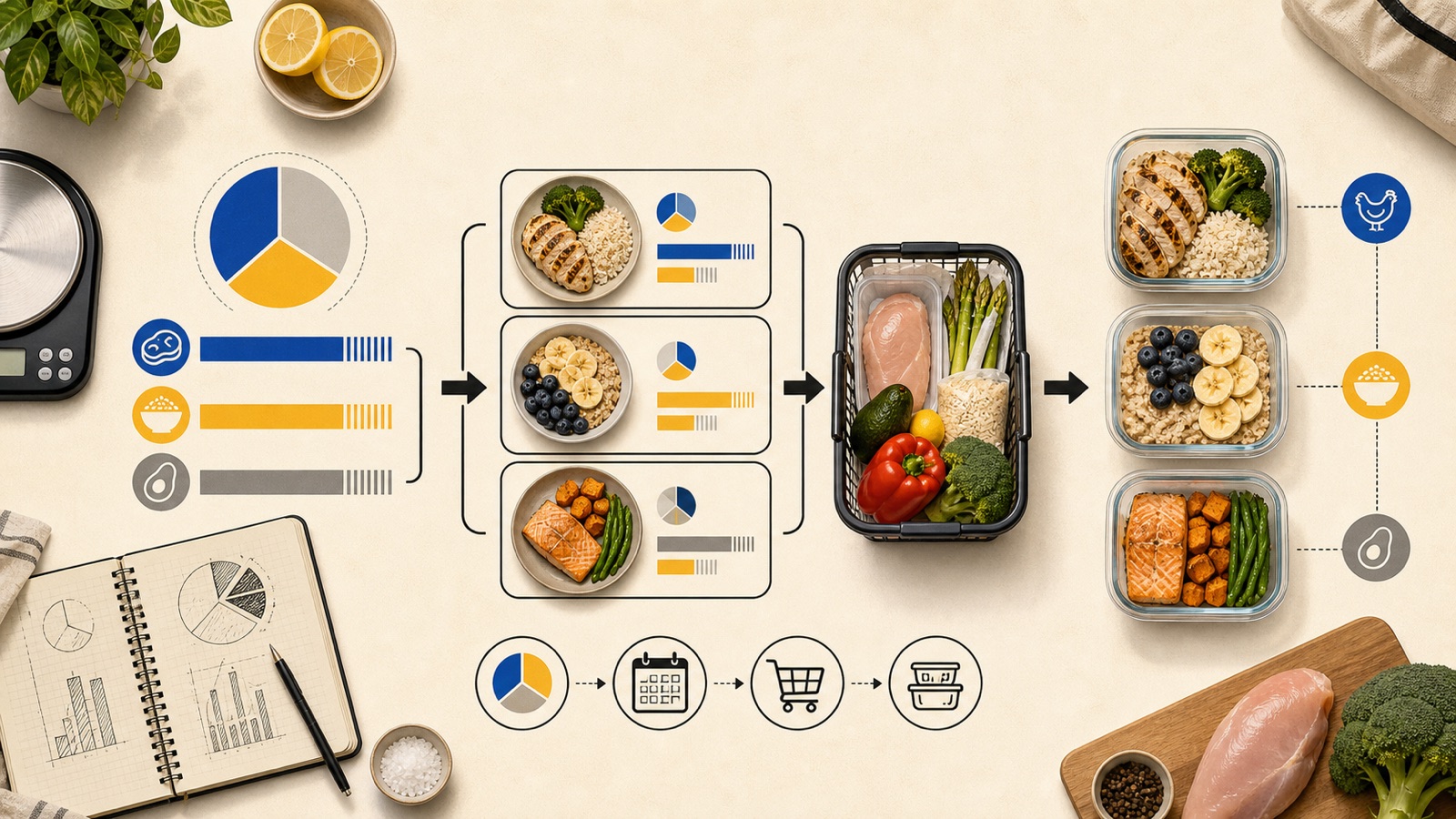
Most meal prep advice is built to solve boredom. Rotate the proteins, vary the sauces, keep four or five recipes in play so you do not end up eating the same tray of chicken until you resent it.
That is a real problem and it deserves the attention it gets. It is just not the problem I have on a Sunday when the week has already got away from me.
This is what I cook then. Ground meat, a bag of frozen vegetables, rice. One pan and a microwave. It is not the most interesting thing I make, and that is close to the point.
The recipe, such as it is
A pound or two of ground meat. One or two bags of frozen vegetables. Rice if you want it. Seasoning. That is the whole list.
Brown and season the meat in a pan. Microwave the vegetables in their bag. Cook the rice, or tear open a pouch. Stir it all together, weigh the finished batch, and divide it between however many containers you are going to eat.
I had been making some version of this for a long time before I built the meal prep builder. The recipe was never the hard part. What I did not have was a quick way to see what swapping 93/7 turkey for 85/15 beef, or dropping the rice, actually did to the macros in each container. That is all the builder is for. You change one input and watch the four numbers move before you shop.
Whole packages, on purpose
The builder only lets you pick whole pounds of meat and whole bags of vegetables. That is not a limitation I got around to fixing. It is the entire design.
Partial packages are how food gets thrown away. Half a bag of frozen broccoli goes to the back of the freezer, gets buried, and comes out in four months covered in ice. The remaining third of a pound of ground turkey sits in the fridge until you are no longer confident about it.
Buying and cooking in whole units removes that. You tip the package in and put the packaging in the bin. Nothing gets stored, nothing gets weighed, nothing needs a decision.
Dry rice is the one exception, and it is a practical one. Nobody cooks a whole bag of rice, so that input takes a gram figure. Everything else is a package.
Why the vegetables are frozen
Cost and availability, mostly. Frozen vegetables are cheap, they are in every supermarket in the country, and they keep long enough that buying them is not a commitment to eating them this week.
They also skip the part of cooking that actually takes the time. No washing, no trimming, no chopping, no board to clean afterward. The bag goes in the microwave and comes out done.
The nutrition objection does not hold up either. When researchers at UC Davis compared four vitamins across eight fresh and frozen fruits and vegetables (Bouzari, Holstege, and Barrett, 2015), the frozen versions came out comparable to fresh overall, and occasionally higher. Beta-carotene was the real exception, dropping sharply in some items. So it is not that frozen is uniformly equal. It is that the gap is small enough to be a bad reason to skip the vegetables entirely, which is the actual alternative on a week like this.
The part that stops it becoming punishment
Eating the same batch four days running sounds worse than it is, because what you are cooking is a base rather than a finished meal.
My default is ground chicken, a stir-fry vegetable blend, and a pouch of microwave rice, seasoned with whatever is already in the cupboard. Then it gets sauced differently every day. Hot sauce one night, soy and sesame the next, salsa and a scoop of Greek yogurt after that. The container is identical. What you put on it is not.
It is also why this does not clash with the case for cooking ingredients rather than finished meals. A seasoned base you finish on the plate is closer to an ingredient than to a meal you committed to on Sunday.
Weigh the batch, not the ingredients
The builder will not tell you what your cooked batch weighs, and that is deliberate.
Rice absorbs water. Meat loses it. Vegetables release some and hold on to the rest. Any number I predicted for the finished pan would be wrong, and it would be wrong differently depending on how long you left the lid off.
So the builder counts the batch macros from what went in, which does not change, and you portion it by weighing the finished food and dividing by your container count. If that logic is familiar, it is the same reason raw and cooked weights are usually a units problem. Cooking moves water around. It does not move the protein.
What planning actually buys you
It is worth being straight about what the evidence here can and cannot say, because meal prep attracts a lot of confident claims.
In a cross-sectional study of just over 40,000 French adults, the people who planned meals ahead (Ducrot and colleagues, 2017) scored higher on diet quality and ate a wider variety of foods, and had lower odds of obesity. Cooking at home shows a similar pattern in US data: adults in households that cooked dinner six or seven nights a week (Wolfson and Bleich, 2015) ate less fat and less sugar, and roughly 140 calories a day fewer, than those cooking once a week or not at all.
Neither of those proves that planning makes you healthier. Both are snapshots rather than experiments, and the Ducrot authors say outright that no causality can be inferred from what they found. People who plan meals are probably different in a dozen other ways.
The pattern fits something smaller and more useful: the decision about what you eat on Wednesday is easier to get right on Sunday, when you are not hungry and standing in front of an open fridge. Prepping does not make food healthier. It moves the decision to a moment when you are in better shape to make it.
What it costs you
This recipe is not exciting. I would not serve it to anyone. Four containers of the same seasoned base is a compromise, and it is worth being honest that you are making one.
Most of the recipes I cook are built to prevent flavor fatigue. This one is built to prevent a different kind: the mental and physical sort, where the barrier is not that you are bored of chicken but that planning and standing up and cleaning a kitchen is more than you have in you.
Those are two different problems and they need two different answers. When I have time to think, I do not use this. I cook something better, off a proper shopping list, with more going on. When I do not have time to think, this is what stands between a decent week and four days of whatever is nearest.
A plan you can cook while tired beats a better one you give up on. Consistency beats precision for the same reason: in Burke and colleagues' systematic review of dietary self-monitoring, the people who tracked more consistently lost more weight than the ones who did it in bursts.
The short version
- Ground meat, frozen vegetables, rice, seasoning. One pan and a microwave.
- Whole packages only. It kills the food waste and removes every weighing decision. Dry rice is the one measured exception.
- Frozen vegetables are cheap, always available, and need no preparation. The nutrient gap against fresh is small.
- Cook a neutral base and sauce it differently each day. The container is the same. The meal does not have to be.
- Weigh the finished batch and divide by your container count. Do not try to predict cooked weight.
- Use it on the weeks when thinking is the scarce resource. Cook something better on the weeks when it is not.
If you want to see what the containers actually come out at, the meal prep builder will run the numbers for whichever combination you are looking at. And if you are not sure what those daily numbers should be in the first place, the macro calculator gives you a starting point to adjust from rather than a target to obey. Protein per container is the number worth checking first, since Schoenfeld and Aragon put a sensible per-meal dose at roughly 0.4 g per kg of bodyweight spread across the day, and the meal prep math walks through where your own figure should come from.
For information and education, not medical advice. If you have a health condition, are pregnant, or take medication that interacts with diet, talk to a clinician before making changes.
End of note
Subscribe
Get the next Field Note by email
A short email when a new article or recipe ships. No spam, no upsell, unsubscribe in one click.